

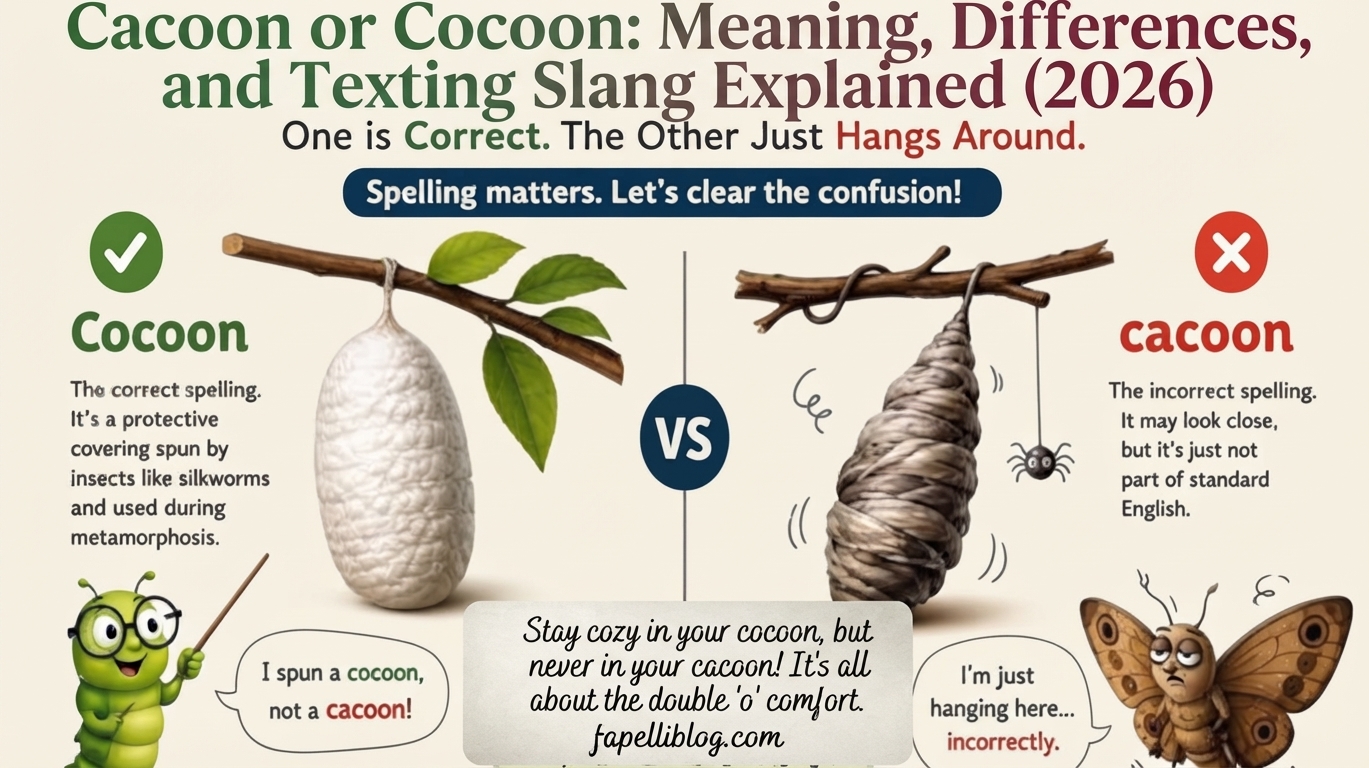
Cacoon or Cocoon—the main difference comes down to standard spelling versus a specific brand name or common typo. Cocoon is the correct standard English dictionary spelling used to describe a protective silk covering or a cozy, safe space to rest. On the other hand, cacoon is a widespread misspelling of the word, though it is also used as a brand name for popular hanging tree tents and swing chairs. Understanding the distinction between cacoon or cocoon helps you avoid grammar mistakes in writing while ensuring you search for the right product or lifestyle concept online.
“Cocoon” refers to the protective silk casing spun by larvae (like caterpillars) before becoming moths or butterflies, or figuratively, a cozy, safe space where someone retreats to rest and recharge. “Cacoon” is a common misspelling of “cocoon”—though it also exists as a specific brand name for hanging tree tents and hammock chairs.
What Does “Cocoon” Mean in Text & Chat?
In modern text conversations and social media slang, “cocoon” (or “cocooning”) describes voluntarily isolating yourself in a comfortable, warm environment to hide away from the world.
When someone texts that they are in “cocoon mode,” they are not referring to biology. They mean they are wrapped in blankets, shutting off notifications, avoiding social interaction, and prioritizing mental recovery.
- Attitude: Low-energy, cozy, self-protective, introverted.
- Tone: Playful, relaxing, unbothered.
- Context: Used when flaking on plans, taking a mental health day, or enjoying a lazy weekend.
What Does “Cocooning” Mean From a Guy vs. a Girl?
While the core meaning remains “retreating into comfort,” subtle nuances apply depending on who sends the text. You May ALso Like To Read About Weak or Week: The Quick Difference (And How Never to Mix Them Up)….
From a Girl:
- Self-Care Routine: Often signals a full rest night involving comfortable loungewear, skincare, movies, and zero social pressure.
- Polite Boundary: A gentle way of saying “I’m overwhelmed and not taking calls or hanging out tonight.”
- Romantic/Cozy Request: When directed at a partner, it usually means wanting to cuddle up at home rather than going out for a date.
From a Guy:
- Recharging & Gaming: Frequently means locking into a room to play video games, watch sports, or decompress after a stressful week.
- Low Social Battery: A direct cue that his social energy is drained and he needs alone time before engaging again.
- Recovery: Sometimes used literally or humorously when nursing an illness or hangover under a pile of blankets.
Quick Reference Table
| Term | Full Form / Primary Meaning | Short Meaning | Common Tone | Suitable For | Not Suitable For |
| Cocoon | Protective larval shell / Safe personal haven | Hiding away in comfort | Warm, cozy, casual | Friends, family, romantic partners | Formal business emails |
| Cocooning | The act of isolating at home for self-care | Going off the grid to rest | Relaxed, introverted | Casual chats, social captions | Professional meeting excuses |
| Cacoon | Common typo / Hanging tent brand | Misspelling of cocoon | N/A | Product references (hanging chairs) | Standard dictionary spelling |
Origin, History & Evolution
The term cocoon entered the English language in the late 17th century, derived from the Provençal French word coco (shell/nut). For centuries, it strictly applied to biology and entomology.
The figurative shift began in the 1980s. Trend forecaster Faith Popcorn coined the term “cocooning” to describe a growing consumer desire to stay indoors, insulate oneself from harsh real-world realities, and build a safe home haven.
With the rise of smartphone culture, TikTok trends, and remote lifestyle habits, “cocooning” evolved into digital slang. Terms like “rot in bed,” “hermit mode,” and “cozy vibes” share direct cultural roots with the classic concept of cocooning. Recommended Reads : What Does BBW Mean? The Real Definition, Context, and Usage Explained…
Usage Across Social Media Platforms
- WhatsApp / SMS: Used in direct messages to decline invitations or explain why someone is slow to reply. (“Sorry for the late text, spent the whole evening cocooning in my duvet.”)
- Instagram: Appears in weekend photo dumps featuring hot drinks, books, or warm bedding. Captions often read: “Cocoon mode: Activated ☕️ blanket status: 10/10.”
- TikTok: Paired with viral cozy-aesthetic audio clips showing bedroom setups, ASMR tea preparation, or cozy rainy-day routines.
- Snapchat: Frequently sent as a snap from bed showing feet tucked under heavy blankets with a low-battery filter overlay.
Real Chat Examples & Real-World Scenarios
Example 1: Canceling weekend plans (Casual / Friendly)
Friend A: Hey! A few of us are heading to the lounge tonight around 9. You in?
Friend B: I wish, but my social battery is at 2%. I’m fully cocooned in bed with Netflix tonight! 🐛
Friend A: Straightforward, no confusion there! Enjoy the rest, catch you tomorrow.
Example 2: Romantic context (Couples)
Partner A: Do you want to go out for dinner or order takeout?
Partner B: Let’s order in and cocoon on the couch. It’s freezing outside.
Common Confusions, Mistakes & Wrong Interpretations
- “Cacoon” vs. “Cocoon”:
- Cocoon (with two o‘s) is the correct standard word for the biological shell and the cozy lifestyle slang.
- Cacoon (with an a) is almost always a spelling mistake, except when referring to Cacoon Tents—a real brand of hanging canvas hammock nests.
- Literal vs. Figurative Misunderstandings:
- Saying “I am in a cocoon” in text is figurative 99% of the time. It does not mean medical isolation or a physical emergency.
- Confusion with Medical Terms:
- In medical contexts, Sclerosing Encapsulating Peritonitis is sometimes referred to as “Abdominal Cocoon Syndrome.” This rare medical condition is entirely unrelated to social slang.
Similar Terms, Alternatives & Cleaner Substitutes
Slang & Casual Alternatives:
- Bed-rotting: Staying in bed all day consuming media (more extreme version).
- Hermit mode: Temporarily cutting off outside contact to stay home.
- Going off the grid: Stepping away from messages and social channels.
- Turtle-ing: Retracting into one’s shell due to stress or shyness.
Formal & Clean Alternatives:
- Recharging
- Taking a mental health day
- Resting / Unwinding
- Staying in
How to Reply When Someone Uses This Term
Depending on your relationship with the sender, here are quick, natural ways to respond:
Playful & Casual Responses:
- “Don’t turn into a butterfly without letting me know first! 🦋”
- “Fair enough! Enjoy the blanket fort.”
- “Save a spot under the blankets for me next time!”
Supportive Responses:
- “Sounds much needed. Turn off notifications and get some good rest!”
- “No worries at all. Take all the time you need to recharge.”
Is “Cocooning” Still Popular? (Current Trends & Longevity)
Yes. While newer internet slang like “bed rotting” gets temporary social media buzz, “cocooning” remains a timeless phrase that spans generational gaps.
Search interest spikes every year during winter months (November through February) as cold weather encourages staying indoors. Its permanence in everyday English ensures it won’t feel outdated or cringe compared to fast-fading internet jargon.
Conclusion & Final Takeaway
The golden rule is simple: Use “Cocoon” for the vibe, and watch out for the “Cacoon” typo.
Whether you are declining a night out, captioning a cozy Sunday photo, or letting friends know you need quiet time, sending a text about “cocooning” communicates a clear boundary: you are prioritizing comfort, unwinding, and taking a well-deserved break from the noise.
