

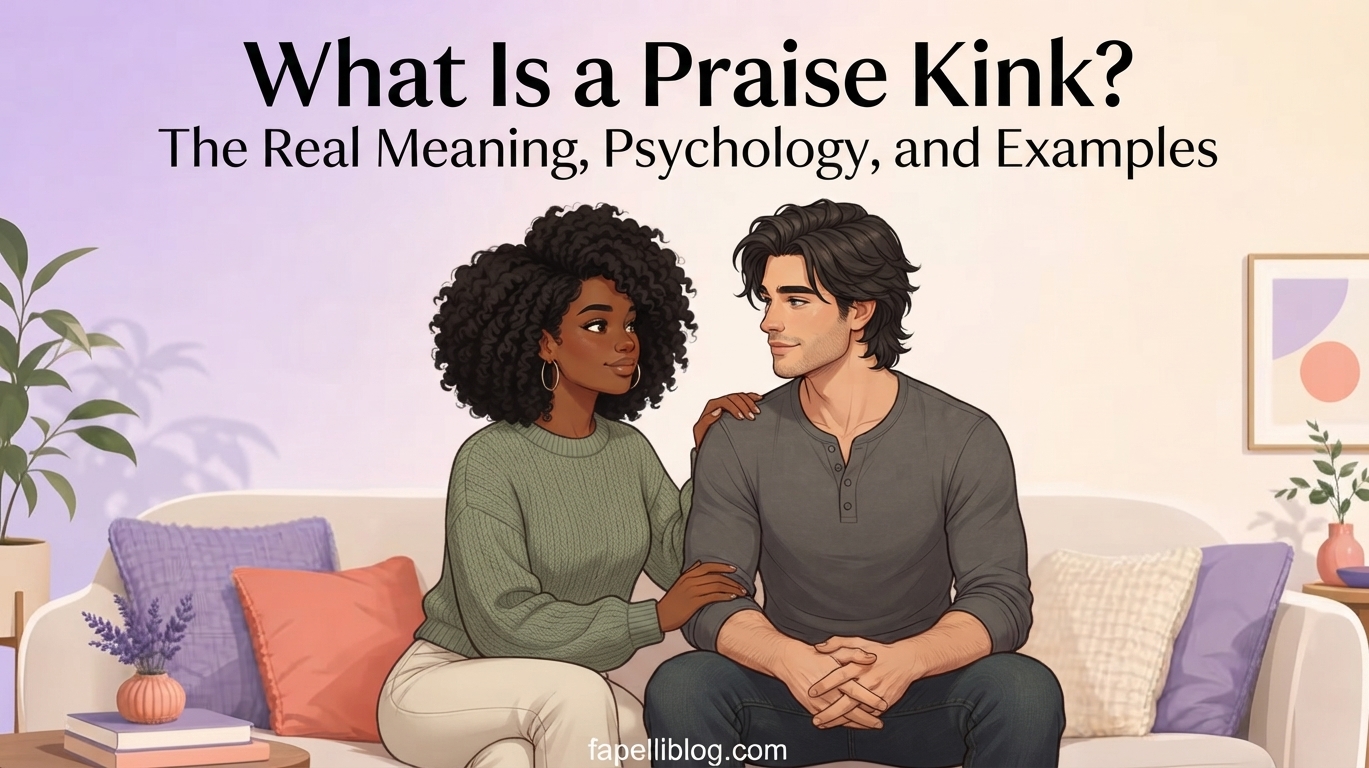
A praise kink is a psychological and sexual preference where receiving verbal validation, compliments, or recognition causes intense arousal, deep emotional satisfaction, or both. Rather than focusing solely on physical acts, people with a praise kink derive pleasure from hearing phrases like “Good job,” “You’re doing so well,” or “I’m so proud of you” during intimate or emotional moments.
The basic dictionary definition makes it sound like a simple preference for compliments. But anyone who actually experiences it knows there’s a lot more going on under the hood.
Here is what the standard definitions miss, why it has exploded in popular culture, and how it actually works in real relationships.
The Core Meaning: How a Praise Kink Works
At its core, a praise kink links emotional validation directly to physical and psychological reward systems. Words of approval trigger a rush of dopamine and oxytocin, making praise feel visually electric, calming, or deeply erotic.
In intimate settings, it often manifests as a desire to be acknowledged for performance, submission, or effort. It is not about vanity or narcissism; it is about safety, connection, and explicit affirmation.
Common Examples in Conversation and Intimacy
To understand how praise functions in practice, consider these direct examples across different contexts:
| Context | Example Phrase | Primary Emotional Trigger |
| Intimate / Sexual | “You’re taking this so well for me.” | Performance affirmation & submission |
| Relational / Emotional | “I love how hard you worked on this; I’m proud of you.” | Deep security & attachment |
| Dynamic / Power | “Good girl / Good boy, just like that.” | Power exchange & approval |
Straightforward. No confusion there. You may also like to read about Morally Grey Meaning!
Why Is It So Popular? The Psychological Triggers
Here’s what most people miss: a praise kink is rarely just about sex. It is deeply rooted in modern psychological needs and emotional fatigue.
That’s not a glitch—it’s basic human conditioning amplified in intimate spaces.
1. The Relief from Decision Fatigue
In everyday life, adults constantly carry the burden of making decisions, managing responsibilities, and self-evaluating. Receiving clear, unambiguous praise signals that you have met expectations. It allows the mind to quiet down and simply exist in the moment.
2. High Rejection Sensitivity
For individuals with high rejection sensitivity or anxious attachment styles, ambiguity in relationships creates anxiety. Praise acts as an immediate safety net. Hearing “You’re doing great” explicitly eliminates the fear of disappointing a partner.
3. Power Exchange Without Harshness
While traditional kink spaces often emphasize dominance, degradation, or physical intensity, a praise kink delivers the structure of power dynamics through positive reinforcement. It offers control and guidance using affirmation rather than punishment.
Pop Culture, TikTok, and Modern Slang
The term shifted from niche community spaces into mainstream vernacular largely due to social media platforms like TikTok, romance literature (particularly “BookTok” tropes), and audio roleplay (ASMR). Recommended Reads: Morally Grey Meaning In English!
In modern romance tropes, the “praising dominant” character archetype has largely replaced the stoic, harsh figures of early 2000s media. Phrases like “Good girl” or “Good boy” have become cultural shorthand for affectionate, affirming dominance across digital media, fan fiction, and online commentary.
Praise Kink vs. Flattery vs. Degradation
It is easy to confuse praise with standard compliments, or to misinterpret how it fits into power dynamics.
| Feature | Standard Flattery | Praise Kink | Degradation Kink |
| Primary Intent | Social politeness or casual compliment | Emotional & erotic arousal via approval | Arousal via humiliation or degradation |
| Tone | Casual, polite, conversational | Affirming, direct, intentional | Edgy, teasing, or humiliating |
| Core Emotion | Appreciation | Security, vulnerability, high reward | Catharsis through vulnerability/shame |
| Key Dynamic | Peer-to-peer | Direct validation / Power exchange | Subversion / Taboo exploration |
Mistakes and Misunderstandings to Avoid
When navigating or exploring this topic, a few critical distinctions get overlooked:
- Assuming it is always sexual: Many people experience non-sexual praise preference, where verbal affirmation is simply their primary emotional love language dialed up to ten.
- Insincere or performative delivery: Praise only works when it feels earned or genuine. Generic or monotone compliments sound performative and break the psychological immersion immediately.
- Confusing praise with ego boosting: Narcissism seeks admiration to assert superiority. A praise kink seeks approval to feel safe, connected, and valued.
Frequently Asked Questions
What does having a praise kink mean?
Having a praise kink means that receiving verbal affirmation, compliments, and explicit approval—especially during intimate or emotionally vulnerable moments—causes strong psychological satisfaction, emotional closeness, or physical arousal.
Is a praise kink psychological?
Yes. It is heavily tied to the brain’s reward processing system. Verbal approval triggers dopamine and oxytocin, bridging emotional security with physical response.
What are common praise kink phrases?
Common phrases include “Good girl/boy,” “You’re doing so well,” “Look at you,” “I’m so proud of you,” and “You did that just right for me.”
The One Rule That Unlocks All Praise Dynamics
If you strip away the social media trends, slang, and complex psychological breakdowns, the entire concept comes down to one single principle:
Praise is not about the words spoken; it is about the safety, presence, and intentional approval behind them.
Whether used in everyday emotional connection or physical intimacy, genuine affirmation satisfies a basic human drive: knowing, without a shadow of a doubt, that you are doing well and pleasing the person who matters to you.
