
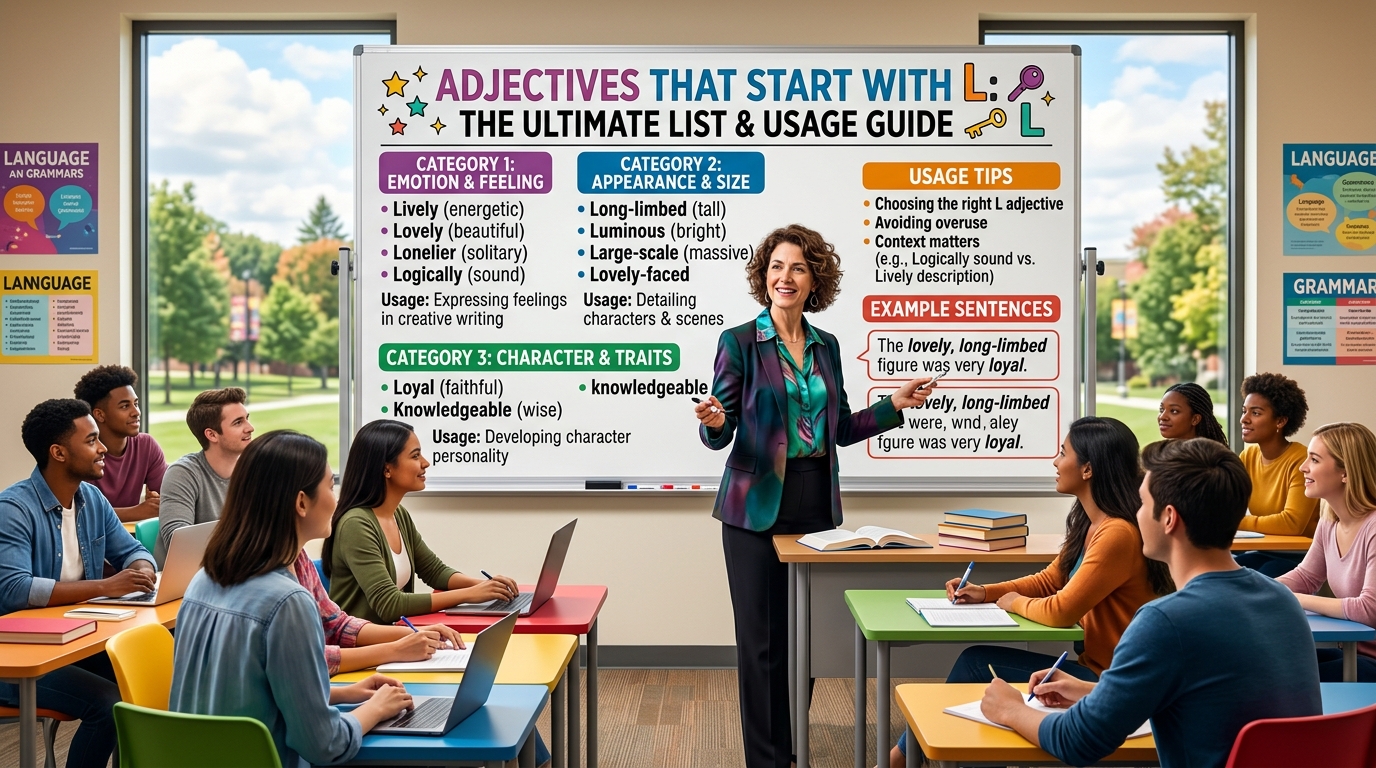
Adjectives that start with L are descriptive words used to modify nouns by detailing traits, qualities, visual appearances, or emotional states. Common examples include luminous, loyal, lethargic, and legendary. Using these descriptors sharpens your writing, enhances vocabulary depth, and elevates everyday communication across professional and creative contexts.
Dictionaries give you flat, alphabetical lists, but they rarely tell you how a word feels in practice. Choosing between luminous and radiant, or lively and boisterous, isn’t about memorizing definitions—it’s about understanding nuance, tone, and real-world impact.
Core Meaning & Literal Usage
An adjective acts as a descriptive modifier. When built around the letter L, these words often capture sensory experiences, personality traits, physical states, or visual aesthetics.
Straightforward. No confusion there.
To build strong descriptive precision, categorized words make targeted selection simple:
Positive Adjectives That Start With L
- Luminous: Emitting or reflecting light; glowing bright.
- Example: “Her luminous skin caught the natural sunlight during the photoshoot.”
- Lively: Full of life, energy, or enthusiasm.
- Example: “The street market had a lively atmosphere that kept visitors engaged.”
- Loyal: Giving or showing firm and constant support or allegiance.
- Example: “He remained a loyal advocate for the brand through every challenge.”
- Legendary: Remarkable enough to be famous or celebrated.
- Example: “Her ability to close difficult sales deals became legendary in the company.”
Negative Adjectives That Start With L
- Lethargic: Sluggish, apathetic, and lacking energy.
- Example: “After working three consecutive shifts, he felt completely lethargic.”
- Lurid: Sensational, shocking, or unpleasantly bright in color.
- Example: “The tabloid printed a lurid headliner that exaggerated the story.”
- Lacking: Deficient or inadequate in amount or quality.
- Example: “The initial proposal was lacking the required financial breakdown.”
Real-World, Slang & Conversational Contexts
Here’s what most people miss: descriptive terms shift dramatically depending on the room you are in. Slang and informal discourse give standard L-adjectives whole new lives.
Casual & Pop Culture Slang
- Lit: Technically short for illuminated, but in modern conversational slang, it describes something exciting, high-energy, or amazing (“That event was absolutely lit“).
- Lowkey: Used conversationally to mean subtle, quiet, or secret (“I am lowkey excited about the new software update”).
- Lame: Slang for uncool, boring, or disappointing (“Leaving the party before midnight felt pretty lame“).
Professional & Business Settings
- Lucrative: Highly profitable or producing wealth (“They signed a lucrative distribution deal”).
- Logical: Reasonable, sensible, and clear-headed (“She presented a logical solution to the bottleneck”).
- Lean: Streamlined, efficient, or without excess waste (“The startup adopted a lean operating framework”).
Nuances & Cultural Connections
Words don’t exist in a vacuum. The letter L carries strong sound symbolism; linguistic studies show that liquid consonants like /l/ create smooth, flowing phonetics that often sound pleasing or gentle to the human ear.
Pop Culture & Literary References
- Lush: Often featured in beauty branding (like the cosmetics retailer Lush) to convey rich, vibrant, natural sensory textures.
- Legendary: Popularized across sports broadcasting and pop culture memes (“Legendary status”) to signify peak performance.
- Lyrical: Frequently used in music criticism to denote poetic, expressive phrasing.
Mistakes & Misunderstandings to Avoid
That’s not a glitch—English is full of descriptive traps. Here are the most common mix-ups with L-adjectives:
- Livid vs. Luminous: Livid means furiously angry or discolored/pale, whereas luminous means glowing with light. Using “livid” to describe a bright smile creates a bizarre visual.
- Luxurious vs. Luxuriant: Luxurious describes rich comfort and luxury (a luxurious hotel). Luxuriant refers to abundant, lush growth (luxuriant hair or vegetation).
- Literal vs. Figurative: Literal means strict, exact adherence to facts without exaggeration. Avoid using it as a dramatic modifier when speaking hyperbolically.
Entity Mapping: Quick Comparison Table
For quick reference, this table maps high-frequency L-adjectives by category, emotional tone, and best-fit context.
| Adjective | Tone / Vibe | Best Used In | Primary Meaning |
|---|---|---|---|
| Luminous | Positive | Creative Writing / Beauty | Emitting light; brightly radiant. |
| Lucrative | Professional | Business / Finance | Producing a great deal of profit. |
| Lethargic | Negative | Health / Everyday | Sluggish, tired, lacking energy. |
| Lowkey | Informal / Slang | Social / Texting | Subtle, restrained, or secret. |
| Laudable | Formal / Academic | Reviews / Formal Writing | Deserving praise and commendation. |
| Lit | High Energy | Social Media / Slang | Exciting, fun, or exceptional. |
The One Rule That Unlocks All Meanings
When choosing descriptive words that start with L, remember the Audience-Aesthetic Rule:
Match the sound and weight of the word to your audience: soft liquid sounds (luminous, lush, lyrical) fit creative contexts, while structured roots (lucrative, logical, legitimate) belong in professional ones.
Positive Adjectives That Start With L
Positive adjectives that start with the letter L bring vibrant energy, warmth, and sophistication to your vocabulary. Words like luminous, lively, and radiant elevate creative descriptions by conjuring images of brightness and spirited enthusiasm, while terms like loyal, laudable, and legitimate convey deep integrity, dependability, and honor. In professional and achievement-focused settings, words like lucrative, logical, and legendary frame success with striking clarity and force. Because the “L” sound is phonetically smooth and expressive, incorporating these uplifting descriptors—whether praising a lovable friend, celebrating a lush landscape, or describing a liberating experience—instantly adds warmth, precision, and persuasive depth to your writing and conversation.
