

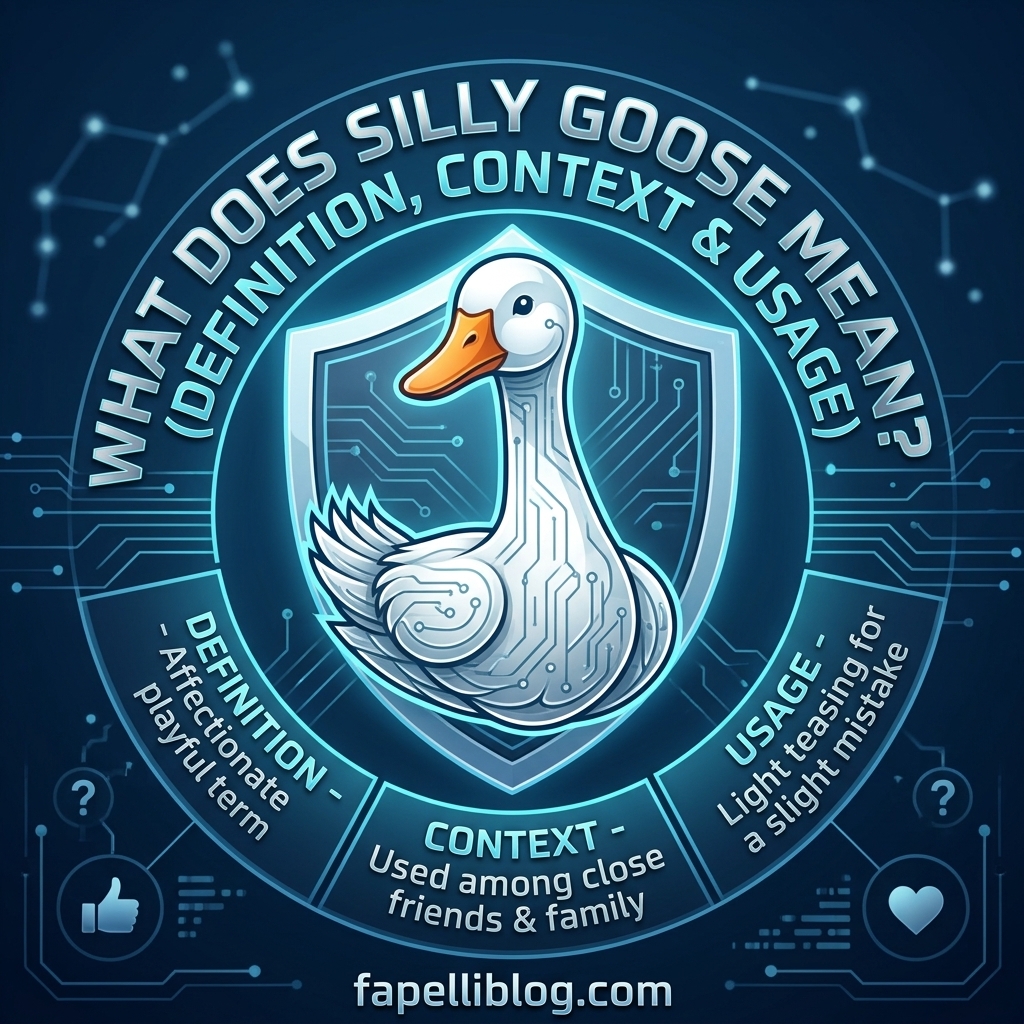
Calling someone a silly goose means you are calling them foolish, playful, or mildly goofy in an affectionate, harmless way. It is a lighthearted idiom used to point out a harmless mistake, a light joke, or quirky behavior without causing any offense or insult.
While dictionary definitions call it simple slang, they often miss how it functions in daily life. It acts as a conversational cushion—a soft way to tease a friend, kid, or partner without any edge or negativity.
Core Meaning and Practical Usage
The phrase combines “silly” (foolish or playful) with “goose.” Why a goose? Geese have a long-standing reputation in folklore for behaving erratically, honking loudly, and waddling clumsily. Putting the two words together creates a gentle nickname.
It carries zero malice. You would never use it in a serious argument or a professional dispute. Instead, it fits light moments where someone makes a tiny lapse in logic or acts goofy. You May Also Like To Read About What Does Squeezy Meaning?
Everyday Examples
- Forgetting something obvious: “You’ve been looking for your glasses for ten minutes and they’re on top of your head, you silly goose.”
- Playful teasing: “Did you really try to unlock the front door with your car key? What a silly goose.”
- Childcare / Parenting: “Don’t put your shoes on the wrong feet, silly goose!”
Real-World Conversational Contexts
Tone dictates everything here. The phrase works because its soft, vintage charm signals instantly that no harm is intended.
1. In Relationships and Dating
Partners often use it as a low-stakes pet name. It diffuses minor friction. If your partner overthinks a simple situation or makes a cute mistake, calling them a silly goose reassures them while keeping the mood light.
2. With Children
It is one of the most popular playful phrases for toddlers and young kids. Children understand it immediately because it sounds fun, whimsical, and entirely safe.
3. Among Close Friends
Friends use it self-referentially or ironically. It adds humor to small blunders during everyday hangouts or text messages.
Nuances and Pop Culture Impact
The phrase has evolved beyond basic spoken slang into internet culture and merchandise.
- Internet Memes: Social media platforms frequently pair pictures of actual geese with quirky captions about everyday mistakes.
- Merchandise: T-shirts, mugs, and stickers featuring geese with captions like “Silly Goose” or “Honk” have made it a popular design staple.
- Tone Contrast: Because it sounds wholesome, people sometimes pair it with mild deadpan delivery for comedy.
Common Mistakes to Avoid
- Don’t use it in formal settings: Never use it with your boss, in a business email, or during a serious performance review.
- Don’t use it during genuine anger: If someone is legitimately upset, calling them a silly goose can feel patronizing or dismissive.
- Don’t confuse it with harsh insults: It is not a synonym for “idiot” or “fool” in a cruel sense. It is strictly affectionate.
Breakdown: “Silly Goose” at a Glance
| Feature | Details |
| Primary Meaning | A playful, affectionate term for someone acting goofy or foolish. |
| Tone | Warm, lighthearted, gentle, informal. |
| Best Audience | Children, romantic partners, close friends, family. |
| Aggression Level | 0% (Completely non-offensive). |
| Formal Equivalent | Absent-minded, goofy, playful. |
Recommended Reads: What Does Squeezy Meaning?
Examples in Romantic Relationships & Dating
- The Overthinker:“You really thought I’d be mad at you for picking the wrong restaurant? You silly goose, I just wanted to hang out.”
- The Lost Item:“You’ve been searching for your phone for fifteen minutes while holding it in your hand, you silly goose.”
- Cute Mispronunciation:“Did you just call it an ‘espresso martini’ without the X, or are you just being a silly goose?”
- Playful Teasing:“You bought three different kinds of milk because you forgot which one I like? What a silly goose.”
- Reassurance:“Of course I want to see your childhood photos, don’t be such a silly goose.”
Examples with Children & Family
- Dressing Up:“You put your boots on the wrong feet again, you silly goose! Come here, let me help you switch them.”
- Silly Behavior:“Why are you wearing a colander on your head like a hat? You silly goose!”
- Messy Eating:“You’ve got ice cream all over your nose, silly goose!”
- Bedtime Routine:“That’s not where your stuffed bear sleeps—he goes on the pillow, silly goose.”
- Game Time:“You tried to hide behind a clear glass door? What a silly goose!”
Examples Among Close Friends
- Texting Blunder:“You sent that message to the group chat instead of your sister, you silly goose. Luckily it was harmless!”
- Mixing Up Days:“Showed up to the gym on a Sunday morning when it doesn’t open till noon? You silly goose.”
- Forgetting Names:“You’ve lived next to him for three years and you still forgot his name? Silly goose behavior.”
- Overpacking:“We are going away for two days and you packed four jackets. You silly goose.”
- Self-Deprecating Humor:“I just poured orange juice into my cereal instead of milk. I am such a silly goose today.”
Casual & Everyday Social Examples
- Minor Tech Fail:“You were talking on mute for two whole minutes before anyone noticed, you silly goose.”
- Wrong Turn:“We took the long way around the entire block just to realize the entrance was right behind us—what silly geese we are.”
- Pet Behavior:“Look at the dog barking at his own reflection in the mirror again. What a silly goose.”
- Mixing Up Tasks:“You put the milk in the pantry and the cereal in the fridge? You absolute silly goose.”
- Misreading a Sign:“You pushed a door that clearly says ‘PULL’ three times in a row, silly goose!”
Final Takeaway
The Silly Goose Rule: Use “silly goose” whenever you want to point out a mistake or goofy moment, but want to make sure the other person knows you are smiling when you say it.
