

“Shana Tova” is a Hebrew greeting that translates literally to “Good Year.” It is the traditional greeting used during Rosh Hashanah, the Jewish New Year, to wish someone a sweet, happy, and prosperous year ahead.
While dictionaries offer a quick two-word translation, they often miss how real people actually use this phrase across different cultural and social settings. Whether you are attending a Rosh Hashanah dinner, texting a Jewish colleague, or trying to avoid an awkward etiquette mistake, knowing how to say and respond to “Shana Tova” matters.
What Does Shana Tova Mean? Core Definition and Translation
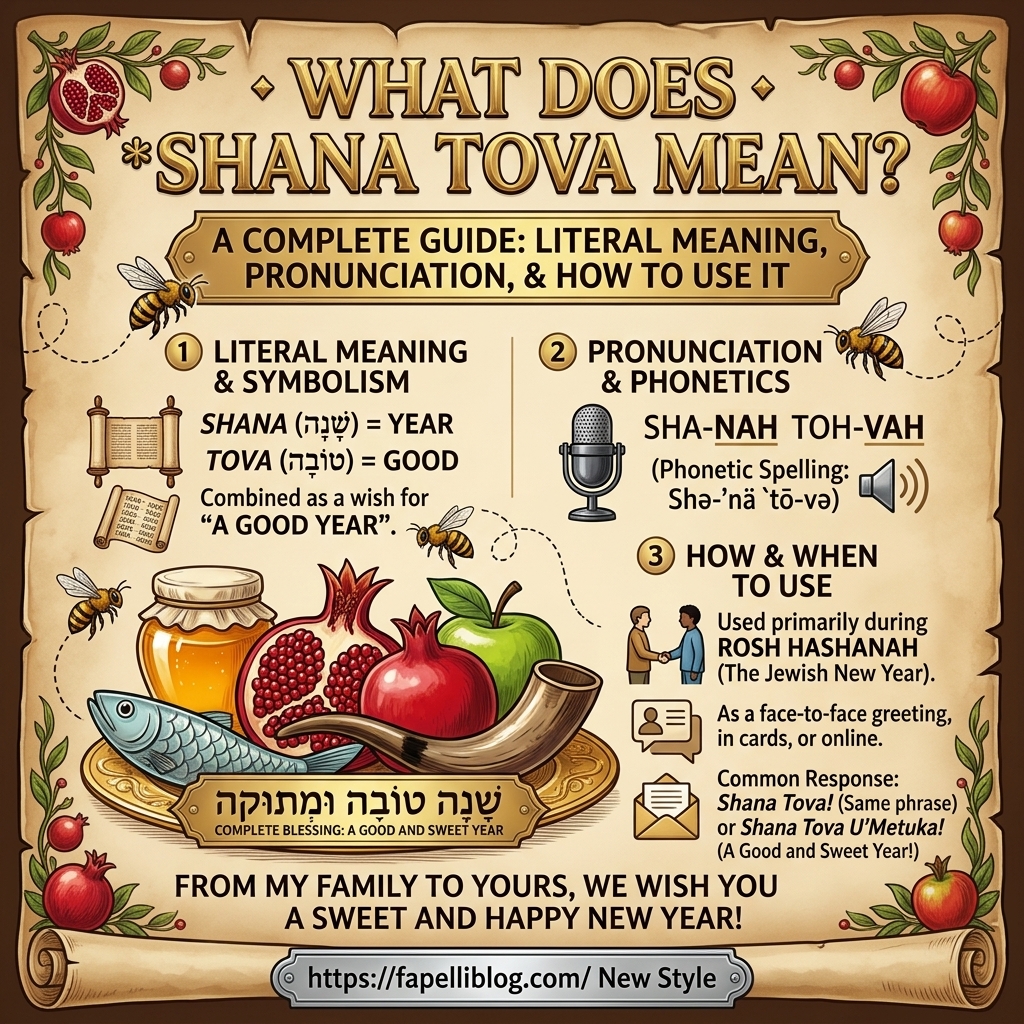
At its root, Shana Tova (שָׁנָה טוֹבָה) consists of two Hebrew words:
- Shana (שָׁנָה): Means “year.”
- Tova (טוֹבָה): The feminine form of “good.”
In Hebrew grammar, adjectives follow the noun they modify, which is why “year good” translates naturally into English as “good year.” You May Also Like to Read About What Does Sempre Meaning In English?
Jewish tradition views Rosh Hashanah not just as a calendar reset, but as a time of judgment and renewal. Because of this, wishing someone a “good year” carries deep spiritual significance. You are expressing a wish for their safety, health, and happiness in the coming twelve months.
How to Pronounce “Shana Tova” Correctly
Pronunciation is straightforward once you know where to place the emphasis:
- Shana: Pronounced shah-NAH (rhymes with “Donna,” with stress on the second syllable).
- Tova: Pronounced toh-VAH (rhymes with “diva,” with stress on the second syllable).
Phonetic Guide: shah-NAH toh-VAH
If you pronounce it SHAH-nah TOH-vah with the stress on the first syllables, native speakers will still understand you perfectly. That variation is common in Ashkenazi tradition and Yiddish-influenced English.
Common Variations of the Greeting
You will hear a few common variations during the High Holy Days. Here is a quick guide to what they mean and when to use them:
| Phrase | Hebrew | Literal Meaning | Best Context |
| Shana Tova | שָׁנָה טוֹבָה | Good Year | Universal Rosh Hashanah greeting. |
| Shana Tova U’Metuka | שָׁנָה טוֹבָה וּמְתוּקָה | A Good and Sweet Year | Warm, affectionate wish for family and friends. |
| L’Shana Tova | לְשָׁנָה טוֹבָה | To a Good Year | Common written greeting on cards and texts. |
| Gmar Chatimah Tova | גְּמַר חָתִימָה טוֹבָה | May you be sealed for a good year | Used between Rosh Hashanah and Yom Kippur. |
How to Reply When Someone Says “Shana Tova”
If someone wishes you “Shana Tova,” replying is simple and stress-free. You do not need to speak Hebrew to respond correctly.
Here are the best ways to respond:
- Say it back: Simply say, “Shana Tova!”
- In English: Reply with “Happy New Year!” or “Thank you, same to you!”
- The warm response: Say “Shana Tova U’Metuka!” if you want to wish them a sweet year in return.
Non-Jewish people can use and accept this greeting. Jewish friends, neighbors, and colleagues always appreciate the thoughtful gesture.
When Should You Say Shana Tova?
Timing matters with Jewish holiday greetings. Use this timeline to ensure you use the phrase at the right time:
- In the weeks leading up to Rosh Hashanah: You can say “Shana Tova” in emails, cards, or casual conversations as the holiday approaches.
- During Rosh Hashanah: This is the peak time to use the greeting.
- Between Rosh Hashanah and Yom Kippur (The Ten Days of Repentance): You can still say “Shana Tova,” though many people shift to “Gmar Chatimah Tova.”
Do not use “Shana Tova” during Hanukkah, Passover, or secular New Year’s Eve (December 31st). It belongs strictly to the Jewish High Holy Days season. Recommended Reads: What Does Sempre Mean!
Common Misconceptions About Shana Tova
1. “It’s just the Jewish version of Happy New Year.”
While it serves a similar social function, Rosh Hashanah is a solemn holiday focused on reflection, self-assessment, and prayer. Wishing someone “Shana Tova” carries a wish for good divine judgment alongside joy.
2. “L’Shana Tova means something completely different.”
Adding the prefix “L'” simply turns the noun phrase into a complete wish: “[May you be inscribed] for a good year.” Both forms are grammatically correct and interchangeable in casual conversation.
3. “You can only say it to religious Jews.”
Rosh Hashanah is celebrated across the entire spectrum of Jewish life, from secular and cultural Jews to Orthodox communities. The greeting is welcome across all traditions.
Frequently Asked Questions
What does “Shana Tova U’Metuka” mean?
It means “A good and sweet year.” The word u’metuka comes from matok, the Hebrew word for sweet. This phrase connects directly to the holiday custom of dipping apples in honey.
Can a non-Jewish person say Shana Tova?
Yes, absolutely. Greeting a Jewish friend, coworker, or neighbor with “Shana Tova” is considered polite and respectful.
Is Rosh Hashanah the only Jewish New Year?
Technically, the Talmud specifies four different “new years” in the Jewish calendar for different agricultural and religious tracking purposes. However, Rosh Hashanah is the main civil and spiritual New Year.
Summary Rule for Using “Shana Tova”
The Golden Rule: Use “Shana Tova” anytime around Rosh Hashanah to wish someone a good year. Reply with “Shana Tova” or “Happy New Year”—both are completely correct.

1 Comment
Pingback: What Does Samesies Mean? (Definition, Slang Usage, and Examples)